The principle
The same outcome, held to one standard
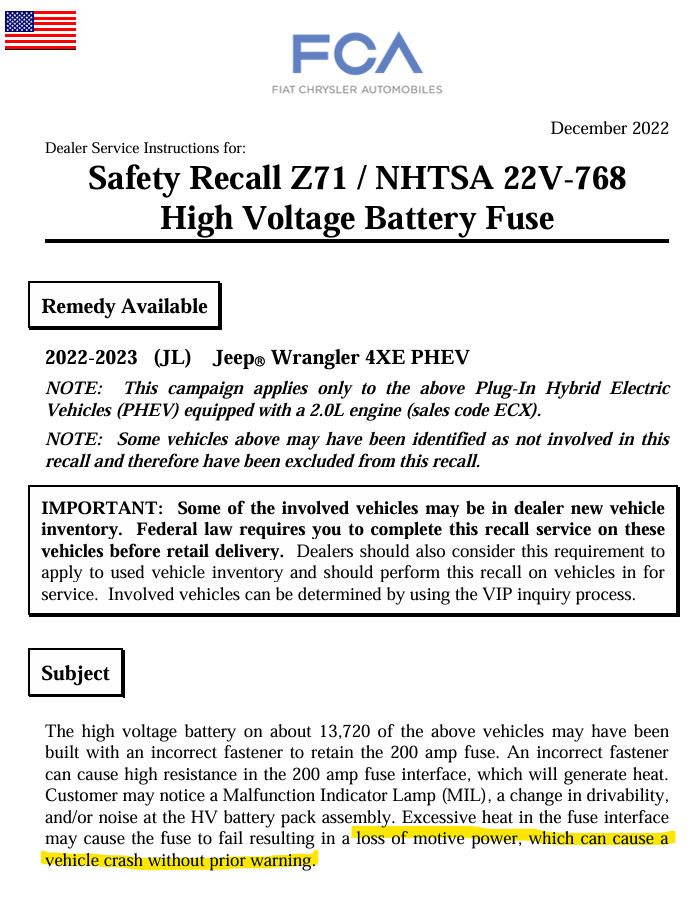
In that recall, a fuse failure that could cause a loss of motive power was treated as a serious safety defect — serious enough to recall vehicles, because, in FCA's own words, it can cause a crash without warning.
This vehicle experiences the same outcome: a sudden loss of motive power during normal driving, without warning. The cause is different — a software power limit rather than a failed fuse — but the result for the driver is identical.
So both of these cannot be true at the same time:
- A loss of motive power is a crash hazard requiring a recall — FCA's position in Recall Z71.
- A loss of motive power is "operating as designed" and normal — the position taken on this vehicle.
The danger is defined by what happens to the driver — the vehicle loses power and may not respond — not by which component, or which software, caused it. A loss of motive power is a loss of motive power.
Note · scope of this exhibit
Recall Z71 / 22V-768 concerns a battery fuse fastener and is a separate matter from the software-related power loss documented on this site. It is cited here only because it establishes the manufacturer's own position that a loss of motive power is a safety hazard — not as a claim that this vehicle falls under that recall.